


Accidents move fast. This guide doesn't. Every step below is attorney-reviewed and specific to New York City, New York law — so you don't miss what matters.
When an Uber or Lyft driver hits you — or you're a passenger in a rideshare collision — the insurance coverage depends on the app status at the time of the crash:
- App off: Driver's personal auto policy applies (NY minimum $25k/$50k)
- App on, waiting for a ride: TLC-mandated $75,000/$150,000 coverage minimum
- Passenger in car (en route): $1,250,000 TLC-required liability minimum — this is the key coverage tier for most rideshare victims
New York's no-fault rules still apply. You file an NF-2 with your own insurer within 30 days. To sue for pain and suffering, your injuries must meet the serious injury threshold under Insurance Law § 5102(d).
Check My Case Value & Protect My Claim →
Free · No obligation · 24/7 intake open
⚡ Free · No Obligation
See If You Qualify in 60 Seconds
Step 1 — Select accident type
What type of accident were you in?
Your Uber & Lyft Accidents
Tap each step as you complete it — your progress saves automatically.
New York City is home to over 80,000 TLC-licensed for-hire vehicles — the largest concentration in the United States. Rideshare accidents in NYC trigger a layered insurance analysis that differs sharply from personal vehicle crashes: TLC licensing requirements, app-status-based coverage tiers, and New York's no-fault rules all interact to determine which policy pays first.
Why This Matters — And What Insurers Won't Tell You
NYC's TLC licensing system creates the highest rideshare liability minimums in the country — $1.25M during active rides. But most accident victims don't know which app-status tier they're in, and both Uber/Lyft and their insurers have strong incentives to argue the lowest applicable tier. Photographing the Lyft/Uber app screen in the driver's vehicle at the scene — or pulling trip data from your own passenger app — creates crucial documentation of app status.
NYC also has a unique 'black car' and livery vehicle ecosystem alongside Uber/Lyft. These vehicles carry different insurance policies and present different coverage arguments than standard rideshare. An attorney experienced in TLC vehicle accidents in NYC knows how to navigate the multiple responsible parties — driver, rideshare company, and any third-party at-fault vehicle.
NYC has over 80,000 TLC-licensed for-hire vehicles — the highest concentration in the US.
TLC-licensed vehicles include Uber, Lyft, Via, yellow taxis, black cars, and livery vehicles. Each has different insurance minimums under TLC rules — the standard rideshare active-ride minimum is $1.25M.
Source: NYC Taxi & Limousine Commission (TLC) 2024 Annual Report
Were you hurt in this type of accident?
Find out if you may be entitled to compensation — it's free and takes 60 seconds.
Check My Eligibility →What To Do Next
- 1
Screenshot the Uber or Lyft app immediately after the accident — both yours (showing your trip was active) and, if possible, the driver's. App status at the moment of the crash determines which coverage tier applies.
- 2
Report the trip in-app. Both Uber and Lyft have built-in accident reporting flows. Use them — they create an official record of the incident and preserve trip data before it can be disputed.
- 3
File NF-2 with your own insurer within 30 days regardless of who was at fault. New York no-fault rules apply to rideshare crashes the same as standard collisions.
- 4
Photograph the TLC plate number (the green sticker on the windshield, separate from the standard license plate) — this identifies the vehicle's TLC license number and confirms the applicable coverage rules.
- 5
Get the NYPD crash report. Call 911; NYPD must respond to injury accidents. The report will list the vehicle's TLC number and the responding insurer's information.
- 6
See a doctor the same day. Rideshare insurers have claims teams that specialize in minimizing payouts. Same-day medical documentation is essential.
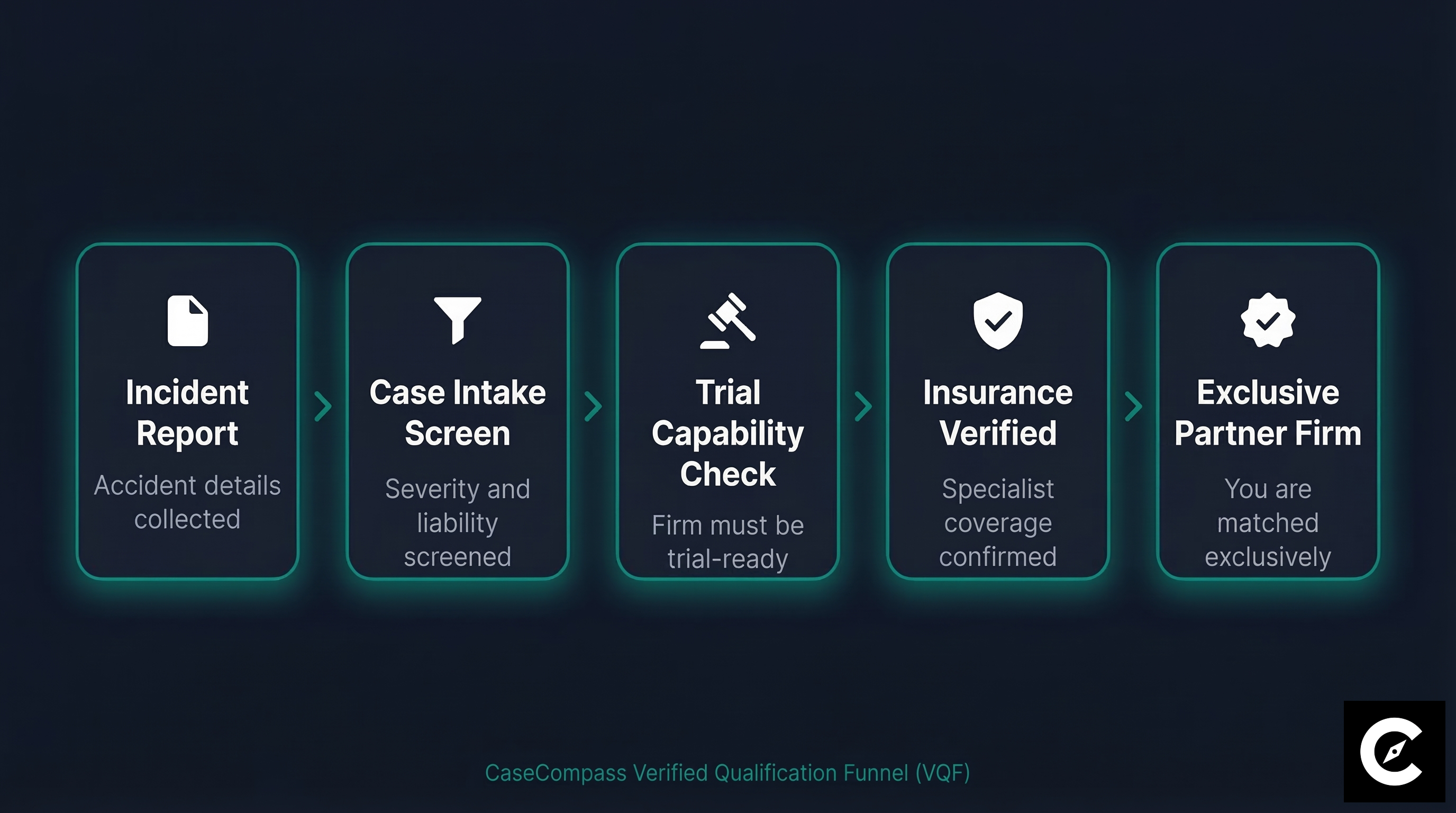
How We Match You with a Verified Firm
Not all law firms are qualified to handle serious injury cases. As shown in our qualification pipeline below, CaseCompass strictly filters incoming cases to ensure you are connected exclusively with a highly-vetted, specialized verified partner firm capable of taking your case to trial if an insurance company refuses to settle fairly.
How much is your case worth in New York?
Statewide settlement data by injury type, verified by David H. Perecman, J.D..
| Metric | Value | Source |
|---|---|---|
| TLC coverage — passenger in vehicle (en route) | $1,250,000 liability minimum | [NYC TLC Rules § 59A-16](https://www.nyc.gov/html/tlc/html/rules/rules.shtml) |
| TLC coverage — app on, awaiting ride | $75,000 / $150,000 minimum | [NYC TLC Rules § 59A-16](https://www.nyc.gov/html/tlc/html/rules/tlc_rules.shtml) |
| TLC coverage — app off | Driver's personal policy only ($25k/$50k NY minimum) | [NY Insurance Law § 3420](https://www.nysenate.gov/legislation/laws/ISC/3420) |
| NYC TLC-licensed vehicles | 80,000+ | NYC TLC 2024 Annual Report |
| NY no-fault PIP limit | $50,000 per person | [NY Insurance Law § 5102(a)](https://www.nysenate.gov/legislation/laws/ISC/5102) |
| NY statute of limitations | 3 years (CPLR § 214) | [CPLR § 214](https://www.nysenate.gov/legislation/laws/CVP/214) |
Common Mistakes to Avoid
- 1
Mistake #1: Not capturing the app status at the scene. The difference between '$75k coverage' and '$1.25M coverage' is whether the driver had accepted a trip. This determination is made from app data
which can be disputed if not documented at the scene. Screenshot both apps immediately.
- 2
Mistake #2: Filing against the wrong insurer first. Rideshare accidents in NYC often involve two insurers: the rideshare company's commercial carrier and the driver's personal carrier. Filing against the wrong one first can delay your claim by months. An attorney with TLC insurance experience handles the coverage determination.
- 3
Mistake #3: Missing the NF-2 30-day deadline because you assumed the rideshare policy pays. No-fault rules apply to all NY auto accidents, including rideshare. You file NF-2 with your own insurer first. Do not wait for the rideshare company's adjuster to contact you.
Why Work With a CaseCompass Attorney
No upfront cost. No obligation. Just answers.
Your Consultation Is Always Free
Every attorney on CaseCompass works on contingency — you pay nothing upfront, and nothing at all unless your attorney wins or settles your case.
Government-Sourced, Attorney-Verified
Every guide is built from official state records, federal statutes, and government data — then reviewed by a licensed California attorney with a verified clean disciplinary record.
Re-Verified Every 90 Days
Content is reviewed on a 90-day cycle with the reviewing attorney's name and Bar number listed transparently on every page.
24/7 Intake — English & Spanish
Every CaseCompass partner firm provides round-the-clock intake in both English and Spanish so you can get answers the moment you need them.
Your Privacy Is Protected
We never share your personal information without your explicit consent — your eligibility check is free, confidential, and carries zero obligation.
More Help
How to Choose the Right Lawyer
OCA registration verification, consultation questions, red flags, and contingency fee structures under 22 NYCRR § 691.20 and § 603.7.
How to Get Your Accident Report
Step-by-step guide to requesting your New York crash report from GSP or the GSCCCA crash portal.
Find a Trusted Auto Body Shop
Vetted collision repair shops in New York City — insurance-approved and independently rated.
Lowball Settlement Offers
How to detect and counter a lowball insurance offer after your accident in New York.
Insurance Claim Denied?
Steps to take when your insurer denies or undervalues your claim — including NY Insurance Law § 5106 bad faith.
Frequently Asked Questions
Who pays if I'm hurt as a passenger in an Uber or Lyft in NYC?▼
If the trip was active (driver had accepted your ride), Uber and Lyft each carry a $1.25M TLC-mandated liability policy that covers passengers. Your own no-fault PIP ($50k) pays first for medical bills regardless of fault. If your injuries meet the serious injury threshold, you can pursue the $1.25M policy for pain and suffering damages.
What if the Uber driver was hit by another car — who is responsible?▼
If a third-party driver caused the collision, their personal liability policy is the primary defendant. The rideshare company's $1.25M policy may still provide excess coverage. Your own no-fault PIP pays your immediate medical bills. The at-fault third-party driver and the rideshare insurer may both be named in a personal injury suit.
How long do I have to sue after an NYC rideshare accident?▼
3 years from the accident date under CPLR § 214 — same as standard auto accidents. If an NYC government vehicle (MTA bus, city vehicle) contributed to the crash, a Notice of Claim must be filed within 90 days, with a lawsuit within 1 year and 90 days.
Does New York's no-fault law apply to Uber and Lyft accidents?▼
Yes. New York's no-fault system applies to all motor vehicle accidents in New York State, including rideshare vehicles. You file NF-2 with your own insurer within 30 days. To sue the at-fault driver for pain and suffering, your injuries must meet the serious injury threshold under § 5102(d).
Sources & Citations
Check My Case Value & Protect My Claim →
Free · No obligation · 24/7 intake open
⚡ Free · No Obligation
See If You Qualify in 60 Seconds
Step 1 — Select accident type
What type of accident were you in?