


Original source: Our Legal Team — Los Angeles Rideshare Accident Lawyers
If you were injured in an Uber or Lyft accident in Los Angeles, your compensation depends on which coverage phase was active at the time of the crash.
- Phase 3 (active trip): Uber and Lyft each carry $1M liability coverage under California PUC § 5431
- Phase 2 (app on, no passenger): $200K contingent coverage applies under CPUC Decision D.13-09-045
- Screenshot the app immediately to document which phase was active
- Report in-app before closing the trip — this preserves the coverage record
- Do not give any recorded statement to any insurer before speaking with an attorney
California law gives you 2 years to file under CCP § 335.1. Coverage phase is the single most important fact in your case — it determines which policy pays and how much is available.
Contact a rideshare accident attorney before your first insurer call.
Find out if you have a case in Los Angeles
⚡ Free · No Obligation
See If You Qualify in 60 Seconds
Step 1 — Select accident type
What type of accident were you in?
Key Takeaways
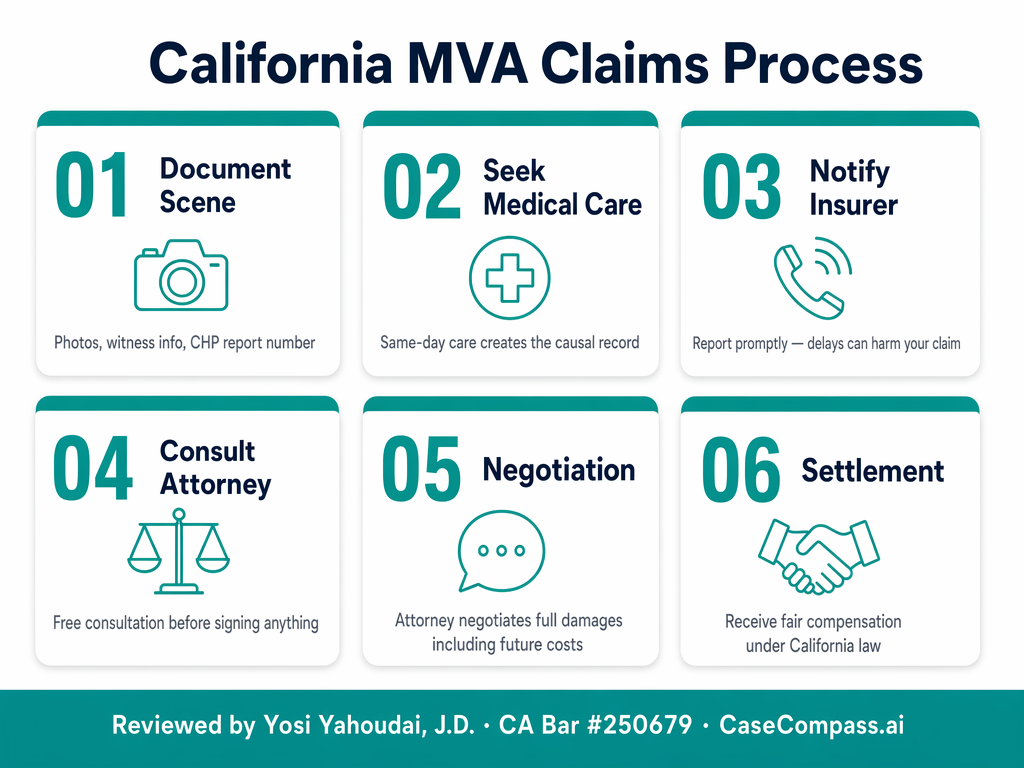
- 1.Screenshot the Uber or Lyft app showing your active trip immediately — this is proof of which coverage phase applies. If the app closes or the trip is cancelled, the coverage phase becomes disputed.
- 2.Photograph both vehicles, all visible injuries, the accident scene, road conditions, and any traffic signals. Take a photo of the rideshare driver's vehicle plate and the app screen showing driver name and vehicle.
- 3.Report the accident through the Uber or Lyft in-app safety feature. This timestamps the incident and triggers the platform's insurance review within their system.
1. The Coverage Phase Blind Spot Most Victims Miss
2. What We Do the Moment You Retain Us
3. The Myth California Insurers Actively Promote
4. Two Steps the Generic Guides Always Miss
Not sure if your offer is fair?
Answer 3 questions to see what your case may be worth — free, no obligation.
Start Free Case Review →Frequently Asked Questions
Who pays if I'm injured as a passenger in an Uber or Lyft in Los Angeles?
If your trip was active (Phase 3), Uber and Lyft are each required by California law to carry $1 million in primary liability coverage. As a passenger, your fault is typically zero. You file directly against the rideshare company's insurer — not the driver personally. An attorney confirms coverage and files the correct claim.
What is California's rideshare insurance law?
California Public Utilities Code § 5431, enforced by the CPUC, requires rideshare companies to carry $1 million in primary liability coverage during an active trip and $200,000 in contingent coverage when the app is on with no passenger. California was the first state to enact TNC insurance laws and sets the highest coverage requirements in the US.
How long do I have to file a rideshare accident claim in California?
California's statute of limitations for personal injury is 2 years from the accident date under CCP § 335.1. However, rideshare companies preserve trip data for a limited window. Contact an attorney within 30 days to ensure GPS records, driver logs, and in-app safety reports are preserved before they are deleted.
What if the Uber driver was off-duty and caused the accident?
If the app was completely off (Phase 1), only the driver's personal auto insurance applies — not Uber's or Lyft's policy. California now requires a minimum of $30,000/$60,000 in bodily injury liability coverage under AB 1107. If your damages exceed those limits, your own uninsured/underinsured motorist (UIM) coverage may apply.
Can I sue Uber or Lyft directly in California?
You can pursue a claim against the platform's insurer directly. Suing Uber or Lyft as a corporate entity is more complex — California courts treat TNC drivers as independent contractors, limiting direct corporate liability. If the platform failed to screen a negligent driver, additional claims may be viable. An attorney evaluates this per case.
Sources and Citations
- California PUC TNC Insurance — Public Utilities Code § 5431
- California Statute of Limitations — [CCP § 335.1](https://leginfo.legislature.ca.gov/faces/codes_displaySection.xhtml?sectionNum=335.1.&lawCode=CCP)
- California AB 1107 — Updated Min. Insurance (Jan. 2025)
- CHP SWITRS — LA County Crash Data
- HCUP — Emergency Department Cost Data
Ready to find out if you qualify?
⚡ Free · No Obligation
See If You Qualify in 60 Seconds
Step 1 — Select accident type
What type of accident were you in?