


Fuente original: Our Legal Team — Los Angeles Rideshare Accident Lawyers
Si sufriste lesiones en un accidente de Uber o Lyft en Los Angeles, documenta el viaje en la app, recibe atención médica y consulta con un abogado antes de dar declaraciones grabadas.
Find out if you have a case in Los Angeles
⚡ Free · No Obligation
See If You Qualify in 60 Seconds
Step 1 — Select accident type
What type of accident were you in?
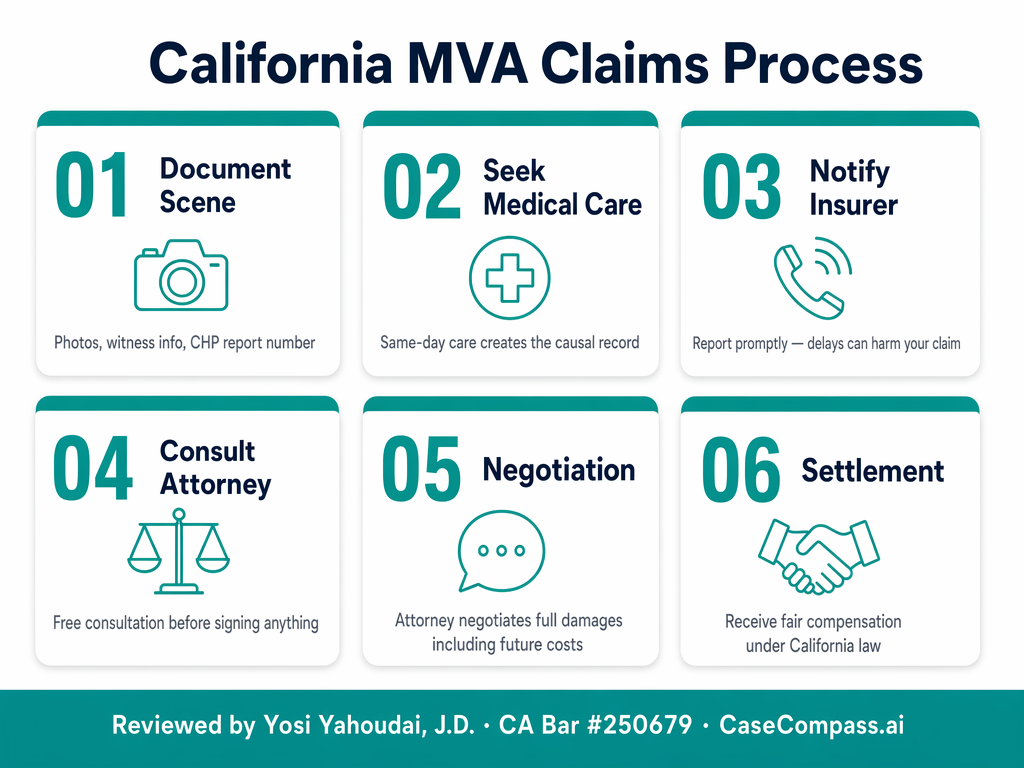
Puntos clave
- 1.Guarda evidencia digital del viaje y del estado de la app.
- 2.No aceptes ofertas rápidas sin revisión legal.
- 3.Define correctamente la póliza aplicable según la fase del viaje.
1. The Coverage Phase Blind Spot Most Victims Miss
2. What We Do the Moment You Retain Us
3. The Myth California Insurers Actively Promote
4. Two Steps the Generic Guides Always Miss
Not sure if your offer is fair?
Answer 3 questions to see what your case may be worth — free, no obligation.
Start Free Case Review →Preguntas frecuentes
Who pays if I'm injured as a passenger in an Uber or Lyft in Los Angeles?
If your trip was active (Phase 3), Uber and Lyft are each required by California law to carry $1 million in primary liability coverage. As a passenger, your fault is typically zero. You file directly against the rideshare company's insurer — not the driver personally. An attorney confirms coverage and files the correct claim.
What is California's rideshare insurance law?
California Public Utilities Code § 5431, enforced by the CPUC, requires rideshare companies to carry $1 million in primary liability coverage during an active trip and $200,000 in contingent coverage when the app is on with no passenger. California was the first state to enact TNC insurance laws and sets the highest coverage requirements in the US.
How long do I have to file a rideshare accident claim in California?
California's statute of limitations for personal injury is 2 years from the accident date under CCP § 335.1. However, rideshare companies preserve trip data for a limited window. Contact an attorney within 30 days to ensure GPS records, driver logs, and in-app safety reports are preserved before they are deleted.
What if the Uber driver was off-duty and caused the accident?
If the app was completely off (Phase 1), only the driver's personal auto insurance applies — not Uber's or Lyft's policy. California now requires a minimum of $30,000/$60,000 in bodily injury liability coverage under AB 1107. If your damages exceed those limits, your own uninsured/underinsured motorist (UIM) coverage may apply.
Can I sue Uber or Lyft directly in California?
You can pursue a claim against the platform's insurer directly. Suing Uber or Lyft as a corporate entity is more complex — California courts treat TNC drivers as independent contractors, limiting direct corporate liability. If the platform failed to screen a negligent driver, additional claims may be viable. An attorney evaluates this per case.
Fuentes y citas
- California PUC TNC Insurance — Public Utilities Code § 5431
- California Statute of Limitations — [CCP § 335.1](https://leginfo.legislature.ca.gov/faces/codes_displaySection.xhtml?sectionNum=335.1.&lawCode=CCP)
- California AB 1107 — Updated Min. Insurance (Jan. 2025)
- CHP SWITRS — LA County Crash Data
- HCUP — Emergency Department Cost Data
Ready to find out if you qualify?
⚡ Free · No Obligation
See If You Qualify in 60 Seconds
Step 1 — Select accident type
What type of accident were you in?