


This guide applies to California law only. Attorney licensing requirements, contingency fee rules, and disciplinary procedures vary by state.
Choosing the right personal injury attorney is the most consequential decision after a serious car accident. Here's what to check before you hire:
Verify their license first. Look up any California attorney at the State Bar of California — confirm active status and zero disciplinary actions.
Confirm contingency fees. A qualified PI attorney charges nothing upfront. Per California BPC § 6147, standard rates: 33.3% pre-litigation, 40% if a lawsuit is filed. Get it in writing — the statute requires it.
Ask the right questions during your free consultation:
- How many cases like mine have you handled?
- Will the senior partner or a junior associate handle my case?
- What is your trial experience if the insurer won't settle?
- How often will you update me on my case?
CaseCompass pre-screens all partner attorneys for active bar status, PI specialization, client satisfaction, and the financial resources to litigate against major insurance companies.
Exceptions: Medical malpractice contingency fees are capped by MICRA (BPC § 6146). Government entity claims require a 6-month pre-suit filing under the Government Tort Claims Act. Workers' compensation cases follow a separate fee schedule.
Choosing Legal Representation (Featured Video)
Attorney Yosi Yahoudai details the key questions to ask during your free legal consultation and why the contingency fee protects your wallet.
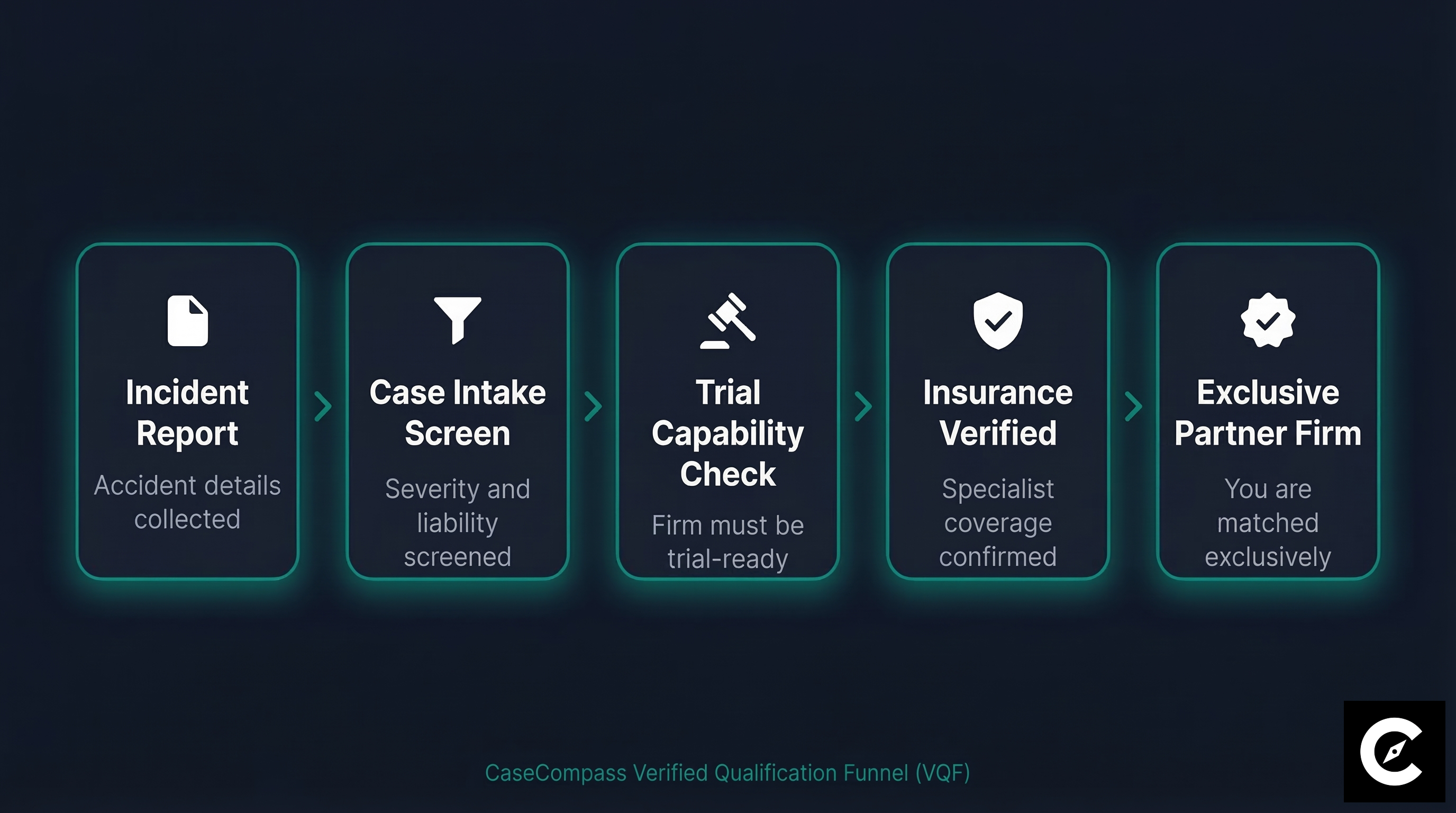
How We Match You with a Verified Firm
Not all law firms are qualified to handle serious injury cases. As shown in our qualification pipeline below, CaseCompass strictly filters incoming cases to ensure you are connected exclusively with a highly-vetted, specialized verified partner firm capable of taking your case to trial if an insurance company refuses to settle fairly.
1. Check Their Bar License — It Takes 30 Seconds
Every practicing attorney must be registered with their state bar under California's licensing requirements. Look up any lawyer at calbar.ca.gov. Verify:
- ✅Check their trial record — do they actually go to court?
- ✅Verify their standing with the California State Bar
- ✅Ensure they specialize specifically in personal injury
Under CA Rule of Professional Conduct 7.1, attorneys cannot make false or misleading communications about their services.
On CaseCompass, every partner attorney's bar number is displayed and verified before listing.
2. Ask These Questions During the Free Consultation
Most PI attorneys offer a free consultation. Use this time to evaluate them:
Q:How many cases like mine have you handled?
Direct experience in your specific injury type matters.
Q:Who will actually work on my case?
Some firms hand cases off to junior associates after signing.
Q:What's your fee structure?
Standard contingency: 33% pre-suit, 40% post-filing. Get it in writing.
Q:What's your honest assessment?
No ethical attorney can guarantee a specific result.
Q:How do you communicate with clients?
Ask about update frequency and response times.
3. Red Flags — Walk Away If You See These
- ⚠They guarantee a specific dollar amount before reviewing your case
- ⚠They pressure you to sign immediately
- ⚠They're vague about fees or won't put the agreement in writing
- ⚠They can't explain their strategy for your case
- ⚠You can't reach them after the initial consultation
- ⚠Public disciplinary actions on their bar record
4. What CaseCompass Checks Before Listing a Firm
Active Bar License
Verified with the state bar
No Disciplinary Actions
Clean public record
Client Review Audit
Minimum rating threshold
PI Specialization
Proven track record
24/7 Intake Capacity
Round-the-clock callbacks
Bilingual Support
Spanish-speaking specialists
5. Contingency Fees — What's Standard?
PI attorneys work on contingency — you don't pay unless you win. Under California BPC § 6147, all contingency fee agreements must be in writing. Typical rates:
| Stage | Typical Fee |
|---|---|
| Pre-litigation (settlement before filing) | 33.3% |
| After filing a lawsuit | 40% |
| If the case goes to trial | 40–45% |
California has no statutory cap on PI contingency fees, but these ranges are standard industry practice. Exception: medical malpractice fees are capped under BPC § 6146 (MICRA).
Frequently Asked Questions
How do I verify a California attorney's license?▼
What is a contingency fee in California?▼
How long do I have to file a personal injury claim in California?▼
Can I switch lawyers during my personal injury case?▼
What should a written fee agreement include?▼
How do I file a complaint against a California attorney?▼
What is the average contingency fee for a car accident case in California?▼
Sources & Citations
- .GovState Bar of California — Attorney Licensee Search
- StatuteCalifornia Business & Professions Code § 6147 — Contingency Fee Agreements
- StatuteCalifornia Code of Civil Procedure § 335.1 — Statute of Limitations for Personal Injury
- StatuteCalifornia Rules of Professional Conduct Rule 7.1 — Communications Concerning a Lawyer's Services
- StatuteCalifornia Business & Professions Code § 6146 — MICRA Medical Malpractice Fee Cap
- .GovCalifornia Courts — Self-Help Center
State-Specific Attorney Selection Guides
Attorney licensing, contingency fee rules, and complaint processes vary by state. Choose your city for jurisdiction-specific guidance:
Ready to talk to a vetted attorney?
Our partners have been pre-screened. Free eligibility check — 60 seconds.
Check My Eligibility →New: Attorney Article Library
Read in-depth articles written by our partner attorneys on California accident law.
Browse Attorney Articles ->