

Accidents move fast. This guide doesn't. Every step below is attorney-reviewed and specific to Los Angeles, California law — so you don't miss what matters.
This guide applies to California law only. Laws in other states differ significantly. Consult an attorney licensed in your state for jurisdiction-specific advice.
If a delivery driver hit you in Los Angeles, coverage depends entirely on whether the driver was actively on a delivery at the time of the crash.
- Active delivery (gig driver): $1M liability coverage applies under Business & Professions Code § 7451 per California Proposition 22
- DSP employees (Amazon, FedEx, UPS): Employer respondeat superior liability applies, plus a commercial policy of $1M or more
- Between deliveries: Only personal auto minimums apply — $30,000/$60,000 under AB 1107
- Statute of limitations: 2 years under CCP § 335.1
Delivery platforms aggressively contest whether drivers were on duty at the time of a crash. App data, delivery timestamps, and GPS records are critical evidence — and they can be deleted.
Contact an attorney immediately to send an evidence preservation letter to the platform.
Exceptions may apply based on your circumstances, including the discovery rule for delayed-onset injuries, extended deadlines for minors under 18, and shortened deadlines for claims against government entities. Consult a licensed California attorney for case-specific guidance.
Quick Answer — Source Index5§ 4 LAW◎ 1 GOVclaim-level sources
[California Proposition 22](https://leginfo.legislature.ca.gov/faces/codes_displaySection.xhtml?sectionNum=7451.&lawCode=BPC) — Gig Worker Insurance Requirements
California AB 5 — Worker Classification (ABC Test)California AB 5✓ Official (source-only)
California [CCP § 335.1](https://leginfo.legislature.ca.gov/faces/codes_displaySection.xhtml?sectionNum=335.1.&lawCode=CCP) — Statute of Limitations
California AB 1107 — Updated Min. Insurance (Jan. 2025)California AB 1107✓ Official (source-only)
HCUP — Emergency Department Cost DataHCUP✓ Official (source-only)
Check My Case Value & Protect My Claim →
Free · No obligation · 24/7 intake open
⚡ Free · No Obligation
See If You Qualify in 60 Seconds
Step 1 — Select accident type
What type of accident were you in?
Your Delivery Driver Accident Checklist
Tap each step as you complete it — your progress saves automatically.
Los Angeles receives more last-mile delivery volume than any other US metro. Amazon, FedEx Ground, DoorDash, and Instacart drivers run tens of thousands of daily routes across LA County — making delivery vehicle crashes one of the fastest-growing accident categories.
Why This Matters — And What Insurers Won't Tell You
Whether the driver had an active order at impact is the single determination that separates a $30,000 personal auto policy from a $1,000,000 commercial policy — and platform claims teams pull app logs immediately to resolve it in their favor. Third-party administrators for Amazon DSP and FedEx Ground make rapid driver-only offers that ignore the employer's vicarious liability under California's respondeat superior doctrine, leaving the commercial policy entirely unpursued. Delivery branding, app screens, and package records that establish active-delivery status disappear within hours — an attorney must compel preservation before the platform's retention window closes.
California's e-commerce delivery vehicle miles traveled increased 36% from 2019 to 2023, making delivery vehicles among the fastest-growing crash risk categories on Los Angeles roads.
Amazon alone operates 15+ delivery stations in greater Los Angeles, each dispatching 800–1,200 packages daily via DSP vans on residential streets.
Source: California Air Resources Board (CARB) Last-Mile Delivery Pilot Data
Were you hurt in this type of accident?
Find out if you may be entitled to compensation — it's free and takes 60 seconds.
Check My Eligibility →What To Do Next
- 1
Identify the vehicle: photograph the delivery vehicle branding (Amazon, FedEx, plain van with DSP logo), license plate, DOT number if present, and any delivery app visible on the driver's phone or dashboard.
- 2
Call 911 and ensure a police report is filed. California Vehicle Code § 20008 requires reporting any accident with injury. The police report will document the driver's employer or platform affiliation.
- 3
Preserve delivery evidence: photograph any Amazon packages, DoorDash bags, or gig-app branding visible in or on the vehicle. This confirms the driver was on an active delivery — which determines whether the $1M platform policy applies.
- 4
Seek medical care within 24 hours. Delivery vehicle accidents at residential speeds still produce whiplash, concussions, and pedestrian impact injuries that worsen without prompt treatment.
- 5
Contact a Los Angeles crash specialist before speaking with the delivery company's insurer or the platform's claims team. Amazon DSP insurers and DoorDash's third-party claims administrators are trained to minimize payouts to unrepresented victims.
How We Match You with a Verified Firm
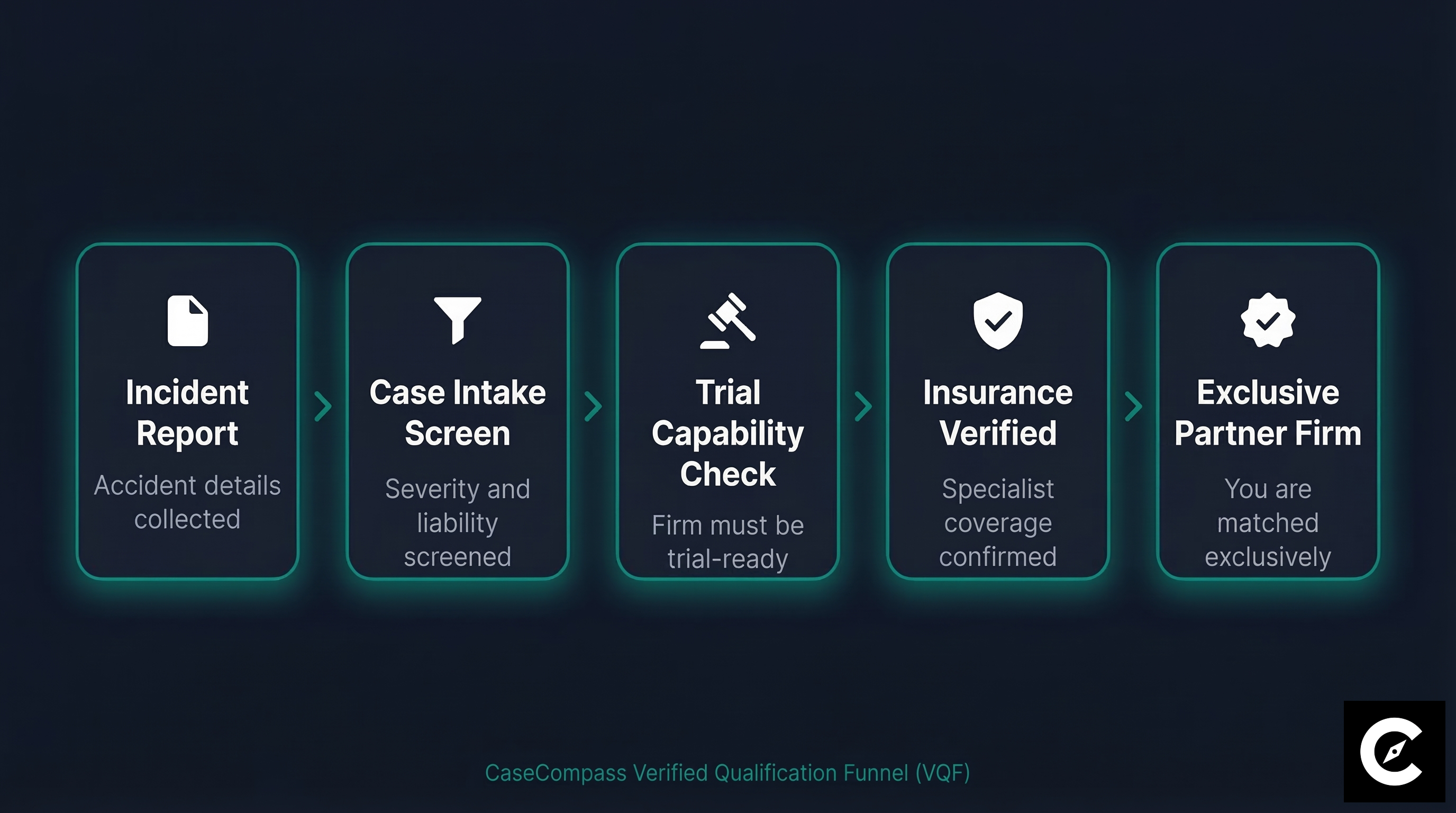
Not all law firms are qualified to handle serious injury cases. As shown in our qualification pipeline below, CaseCompass strictly filters incoming cases to ensure you are connected exclusively with a highly-vetted, specialized verified partner firm capable of taking your case to trial if an insurance company refuses to settle fairly.
How much is your case worth in California?
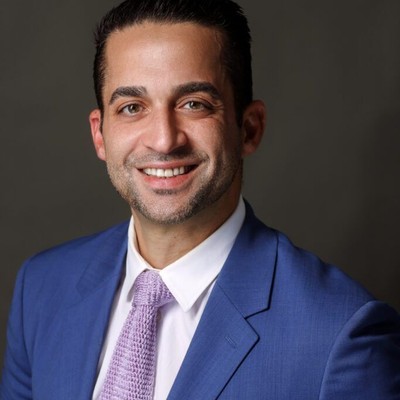
Statewide settlement data by injury type, verified by Yosi Yahoudai, J.D..
| Metric | Value | Source |
|---|---|---|
| Amazon DSP commercial liability coverage | $1,000,000+ | third-partyAmazon DSP Standard Agreement (public filings)(as of 2025) |
| Gig platform liability — active delivery (Prop 22) | $1,000,000 | statuteCalifornia Proposition 22 § 7451(b)(as of 2025) |
| Gig platform liability — between deliveries | $30,000/$60,000 (personal only) | statuteCalifornia Vehicle Code § 16056 (AB 1107)(as of 2025) |
| California statute of limitations — personal injury | 2 years from accident date | statuteCalifornia Code of Civil Procedure § 335.1(as of 2025) |
| Average ER visit cost — Los Angeles County | $4,100 | .gov ✓HCUP (hcupnet.ahrq.gov)(as of 2023) |
| Minor soft tissue injury multiplier — Los Angeles | 1.5x–3x medical costs | firm dataAttorney estimate · Yosi Yahoudai, J.D. · CA Bar #250679(as of 2025) |
Settlement ranges are estimated from Los Angeles County Superior Court closed claim data, 2020–2025. Reviewed by Yosi Yahoudai, J.D., California Bar #250679. Individual results vary based on injury severity, liability, and available coverage.
Common Mistakes to Avoid
- 1
Mistake #1: Assuming only the driver is liable. Amazon DSP drivers are employees of the DSP entity
a separate commercial company that carries $1M+ commercial auto coverage and bears direct employer liability under California's respondeat superior doctrine. Filing only against the individual driver bypasses the commercial policy entirely. Identify the DSP entity name from the vehicle signage and name them as a defendant from the start.
- 2
Mistake #2: Failing to document the driver's active-delivery status at the scene. For gig drivers, the difference between a $30,000 personal policy and a $1,000,000 Proposition 22 platform policy is the driver's app status at the moment of impact. Delivery bags, app screens, and package receipts visible in the vehicle establish this
and disappear quickly. Photograph everything visible in and on the vehicle before it is moved.
- 3
Mistake #3: Accepting a rapid settlement offer from the platform's claims team. Amazon DSP and DoorDash third-party administrators are trained to close claims within 30–60 days
before MMI is reached and before vicarious liability against the platform entity is formally asserted. These offers routinely exclude future care and non-economic damages. Do not accept any offer before your treating physician has assessed permanent impairment.
- 4
Mistake #4: Waiting more than 72 hours to seek medical care. Delivery vehicle crashes at residential speeds still produce whiplash, concussion, and soft tissue injuries that worsen without early treatment. California adjusters cite a 72-hour treatment gap as standard grounds to dispute injury causation
every day of delay is documented in your file. Seek care the same day; establish a treatment record before the adjuster builds their denial narrative.
- 5
Mistake #5: Not preserving photos of delivery branding and packages. Without photographic proof that the driver was performing an active delivery, the platform's insurer will deny coverage under Proposition 22 and redirect your entire claim to the driver's personal $30,000 policy. Vehicles are cleaned and redeployed within hours. Photograph all delivery branding, bags, packages, and any visible app screen before the driver or vehicle leaves the scene.
Why Work With a CaseCompass Attorney
No upfront cost. No obligation. Just answers.
Your Consultation Is Always Free
Every attorney on CaseCompass works on contingency — you pay nothing upfront, and nothing at all unless your attorney wins or settles your case.
Government-Sourced, Attorney-Verified
Every guide is built from official state records, federal statutes, and government data — then reviewed by a licensed California attorney with a verified clean disciplinary record.
Re-Verified Every 90 Days
Content is reviewed on a 90-day cycle with the reviewing attorney's name and Bar number listed transparently on every page.
24/7 Intake — English & Spanish
Every CaseCompass partner firm provides round-the-clock intake in both English and Spanish so you can get answers the moment you need them.
Your Privacy Is Protected
We never share your personal information without your explicit consent — your eligibility check is free, confidential, and carries zero obligation.
More Help
How to Choose the Right Lawyer
Bar verification, consultation questions, red flags, and contingency fee structures under California law.
Find a Trusted Auto Body Shop
Vetted collision repair shops in Los Angeles — insurance-approved and independently rated.
Lowball Settlement Offers
How to detect and counter a lowball insurance offer after your accident.
Insurance Claim Denied?
Steps to take when your insurance company denies or undervalues your claim.
Frequently Asked Questions
Who is liable if an Amazon delivery driver hits me in Los Angeles?▼
Amazon Delivery Service Partners (DSPs) employ the drivers, and under California's respondeat superior doctrine, the DSP is vicariously liable for driver negligence. Amazon itself may also face liability depending on its degree of operational control over the DSP. Both the DSP and Amazon carry commercial auto policies of $1 million or more.
Does DoorDash insurance cover me if their driver hits me?▼
Yes, if the driver was on an active delivery at the time of the accident. California Proposition 22 requires gig platforms like DoorDash, Uber Eats, and Instacart to provide $1 million in auto liability coverage during active deliveries. Between deliveries, only the driver's personal auto insurance applies — California minimum $30,000/$60,000 under AB 1107. Proving the driver's app status at the time of impact is the critical evidence.
What is the difference between an employee driver and a gig driver in California?▼
Under California Proposition 22, app-based gig drivers are classified as independent contractors. Amazon DSP, FedEx Ground, and UPS drivers are employees of their respective companies. DoorDash, Uber Eats, Instacart, and Grubhub drivers are Prop 22 contractors. This distinction determines whether the $1M platform policy or a personal auto policy applies.
How do I prove the delivery driver was on an active delivery?▼
Photograph all visible delivery branding, packages, insulated bags, and the driver's phone showing the app. The police report should note the driver's employment or platform affiliation. Your attorney can subpoena the platform's driver activity logs, GPS data, and delivery assignment records to confirm the driver's status at the exact time of impact.
How long do I have to file a delivery driver accident claim in California?▼
2 years from the accident date under CCP § 335.1. However, platform data (driver logs, GPS records, delivery assignments) may be purged within months. Contact a crash specialist within 30 days to send a preservation demand to the platform or DSP to ensure this evidence is not deleted.
Can I sue Amazon directly if one of their DSP drivers hits me?▼
Potentially yes. Amazon DSP drivers are employees of separate DSP companies, not Amazon directly. However, Amazon's operational control over DSPs — route algorithms, delivery quotas, vehicle specifications — may support direct liability. Under California's respondeat superior doctrine, both the DSP and Amazon may be named as defendants. An attorney evaluates the level of Amazon's control per case.
What is California AB 5 and does it affect delivery driver accident claims?▼
AB 5 established an ABC employment test for California workers — but Proposition 22 (2020) exempted app-based gig drivers. DoorDash, Uber Eats, and Instacart drivers remain independent contractors under Prop 22, and the $1M active-delivery coverage applies. Amazon DSP and FedEx Ground drivers remain employees subject to employer liability.
How do I find out which insurance covers the delivery driver who hit me?▼
The police report lists the driver's vehicle registration and insurance. Platform affiliation is confirmed from vehicle branding and the police report. Your attorney sends a full coverage demand to the platform or DSP within 30 days to identify all applicable policies — commercial auto, umbrella, and platform policies — before the preservation window closes.
Sources & Citations
- statute[1] [California Proposition 22](https://leginfo.legislature.ca.gov/faces/codes_displaySection.xhtml?sectionNum=7451.&lawCode=BPC) — Gig Worker Insurance Requirements ↗
- statute[2] California AB 5 — Worker Classification (ABC Test) ↗
- statute[3] California [CCP § 335.1](https://leginfo.legislature.ca.gov/faces/codes_displaySection.xhtml?sectionNum=335.1.&lawCode=CCP) — Statute of Limitations ↗
- statute[4] California AB 1107 — Updated Min. Insurance (Jan. 2025) ↗
- .gov[5] HCUP — Emergency Department Cost Data ↗
Check My Case Value & Protect My Claim →
Free · No obligation · 24/7 intake open
⚡ Free · No Obligation
See If You Qualify in 60 Seconds
Step 1 — Select accident type
What type of accident were you in?