

Accidents move fast. This guide doesn't. Every step below is attorney-reviewed and specific to Los Angeles, California law — so you don't miss what matters.
This guide applies to California law only. Laws in other states differ significantly. Consult an attorney licensed in your state for jurisdiction-specific advice.
If you were injured in a truck accident in Los Angeles, federal law sets minimum insurance between $750,000 and $5M depending on cargo type, under 49 CFR § 387.9.
- Evidence window: Federal regulations require log retention for only 6 months under 49 CFR § 395.8(k) — after that, records can be legally destroyed
- Spoliation letter: Must be sent within 48 hours to preserve black box data, logs, and maintenance records
- Multiple defendants: Driver, carrier, cargo loader, and manufacturer may each carry separate liability
- Statute of limitations: 2 years under CCP § 335.1
California recorded 392 large truck crash fatalities in 2023, according to NHTSA FARS. Trucking companies deploy defense teams immediately after a crash — the evidence timeline works against you from day one.
Retain an attorney within 24 hours to trigger evidence preservation.
Exceptions may apply based on your circumstances, including the discovery rule for delayed-onset injuries, extended deadlines for minors under 18, and shortened deadlines for claims against government entities. Consult a licensed California attorney for case-specific guidance.
Quick Answer — Source Index4◎ 3 GOV§ 1 LAWclaim-level sources
[FMCSA](https://www.fmcsa.dot.gov/) Financial Responsibility — 49 CFR § 387.9[FMCSA](https://www.fmcsa.dot.gov/) Financial Responsibility✓ Official (source-only)
[FMCSA](https://www.fmcsa.dot.gov/) Hours of Service — 49 CFR Part 395[FMCSA](https://www.fmcsa.dot.gov/) Hours of Service✓ Official (source-only)
California [CCP § 335.1](https://leginfo.legislature.ca.gov/faces/codes_displaySection.xhtml?sectionNum=335.1.&lawCode=CCP) — Statute of Limitations
[NHTSA FARS](https://www.nhtsa.gov/research-data/fatality-analysis-reporting-system-fars) — California Truck Fatality Data[NHTSA FARS](https://www.nhtsa.gov/research-data/fatality-analysis-reporting-system-fars)✓ Official (source-only)
Check My Case Value & Protect My Claim →
Free · No obligation · 24/7 intake open
⚡ Free · No Obligation
See If You Qualify in 60 Seconds
Step 1 — Select accident type
What type of accident were you in?
Your Truck Accident Checklist
Tap each step as you complete it — your progress saves automatically.
Los Angeles is the busiest freight corridor in the US. The Ports of LA and Long Beach handle 40% of all US container imports, routing thousands of commercial trucks daily on I-710, I-10, and I-405.
Why This Matters — And What Insurers Won't Tell You
Trucking carriers deploy rapid-response investigators to crash scenes within 2–4 hours — photographing evidence, securing ELD data, and gathering witness statements before most victims have retained counsel. Under 49 CFR § 395.8(k), driver logs are legally destroyable after 6 months, and carriers rely on that clock; a spoliation letter sent within 48 hours is the only mechanism to legally compel preservation. Large freight crashes on LA corridors typically involve multiple separately insured defendants — the driver, carrier, and cargo loader — and the $750,000 federal minimum under 49 CFR § 387.9 is the floor, not the ceiling.
California recorded 392 large truck crash fatalities in 2023 — among the highest of any state in the US.
Maricopa County, LA County, and the Central Valley freight corridors account for a disproportionate share of California's truck fatalities due to high commercial vehicle volume.
Source: [NHTSA FARS via Truck Safety Coalition](https://www.nhtsa.gov/research-data/fatality-analysis-reporting-system-fars) (nhtsa.gov)
Were you hurt in this type of accident?
Find out if you may be entitled to compensation — it's free and takes 60 seconds.
Check My Eligibility →What To Do Next
- 1
Call 911 immediately. California Vehicle Code § 20008 requires reporting any accident involving injury. Your police or CHP report is the foundation of your claim.
- 2
Photograph the truck's DOT number, carrier name on the cab door, license plate, cargo type placards, and any visible mechanical defects — blown tires, brake issues, unsecured loads. These details identify the correct defendants.
- 3
Do not speak to the trucking company, their insurer, or their rapid-response attorneys. Carriers deploy accident reconstruction teams within hours. Anything you say is recorded and used against you.
- 4
Contact a Los Angeles personal injury attorney within 48 hours to send a spoliation letter. This legally forces the carrier to preserve driver logs, GPS tracking data, electronic control module (ECM/black box) data, dashcam footage, and drug test records before they are deleted.
- 5
Follow up with a specialist for all injuries. Traumatic brain injuries, spinal injuries, and internal bleeding from truck accidents often require months of treatment. Your full damages cannot be assessed until you reach Maximum Medical Improvement (MMI).
Expert Insight from Our Legal Team
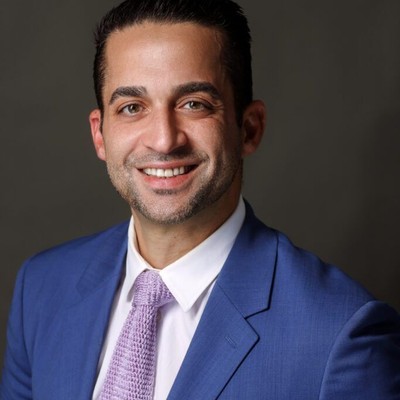
Written by Our Legal Team — Los Angeles Truck Accident Lawyers · Reviewed by Yosi Yahoudai, J.D. · Adapted for CaseCompass
1The FMCSA Evidence Lock Protocol We Run in Every Case▼
The first thing we do in every commercial truck case — within hours of being retained — is what we call the FMCSA Evidence Lock Protocol: a formal spoliation letter sent by certified mail and email to the carrier, their insurer, and any DSP, legally compelling them to preserve the Electronic Logging Device (ELD) data, GPS unit records, dashcam footage, drug test results, and pre-trip inspection logs. We have seen carriers acknowledge receipt of this letter and still 'accidentally' overwrite data — which is exactly the conduct California courts sanction heavily under evidence spoliation rules. If you arrive at our office more than 48 hours after the crash without having sent this letter, the most critical evidence in your case may already be gone.
2The California Truck Liability Matrix▼
We have handled fatigue crashes, jackknifes on the I-10, brake failures on the Grapevine, and rollovers at the Port of Long Beach. Each type of crash requires a different legal strategy — and a different set of defendants. Fatigue cases require ELD violations under FMCSA Part 395. Overloaded cargo requires the shipper's manifest and weigh station records. Brake failures require the maintenance log and CVSA inspection history. Before we negotiate a single dollar, we run what we call the California Truck Liability Matrix — mapping every defendant to their insurance coverage and the evidence needed to hold them accountable. The most heartbreaking cases we see are victims who settled for the driver's personal $30,000 policy when a cargo shipper's $1 million policy was sitting untouched.
3Why 'Sue the Truck Driver' Is Dangerously Incomplete Advice▼
The driver is rarely the only defendant and almost never the largest insurance source. Under California's respondeat superior doctrine, the carrier is liable for the driver's negligence and holds federal minimum liability of $750,000 to $5 million depending on cargo type. The cargo shipper is independently liable if improper loading caused the crash. The truck manufacturer faces product liability if a defective brake or tire contributed. We run the Liability Matrix on every case — a case that looks like a $50,000 driver claim often becomes a $750,000 carrier claim once we pull the full insurance schedule and load manifest.
4The Defense Strategy Trucking Companies Use — and How We Counter It▼
Trucking companies invest in post-accident investigations designed to isolate blame on the driver alone, protecting the carrier's premium rates. The argument we counter most often: 'the driver passed their pre-trip inspection.' What defense attorneys do not volunteer: carriers routinely sign off on inspections without performing them. We subpoena the inspector's identity and shift records to test that claim directly. We also focus on the drug and alcohol test the carrier is federally required to administer post-accident under 49 CFR § 382.303 — if that test was delayed or not performed, it is independent evidence of negligence.
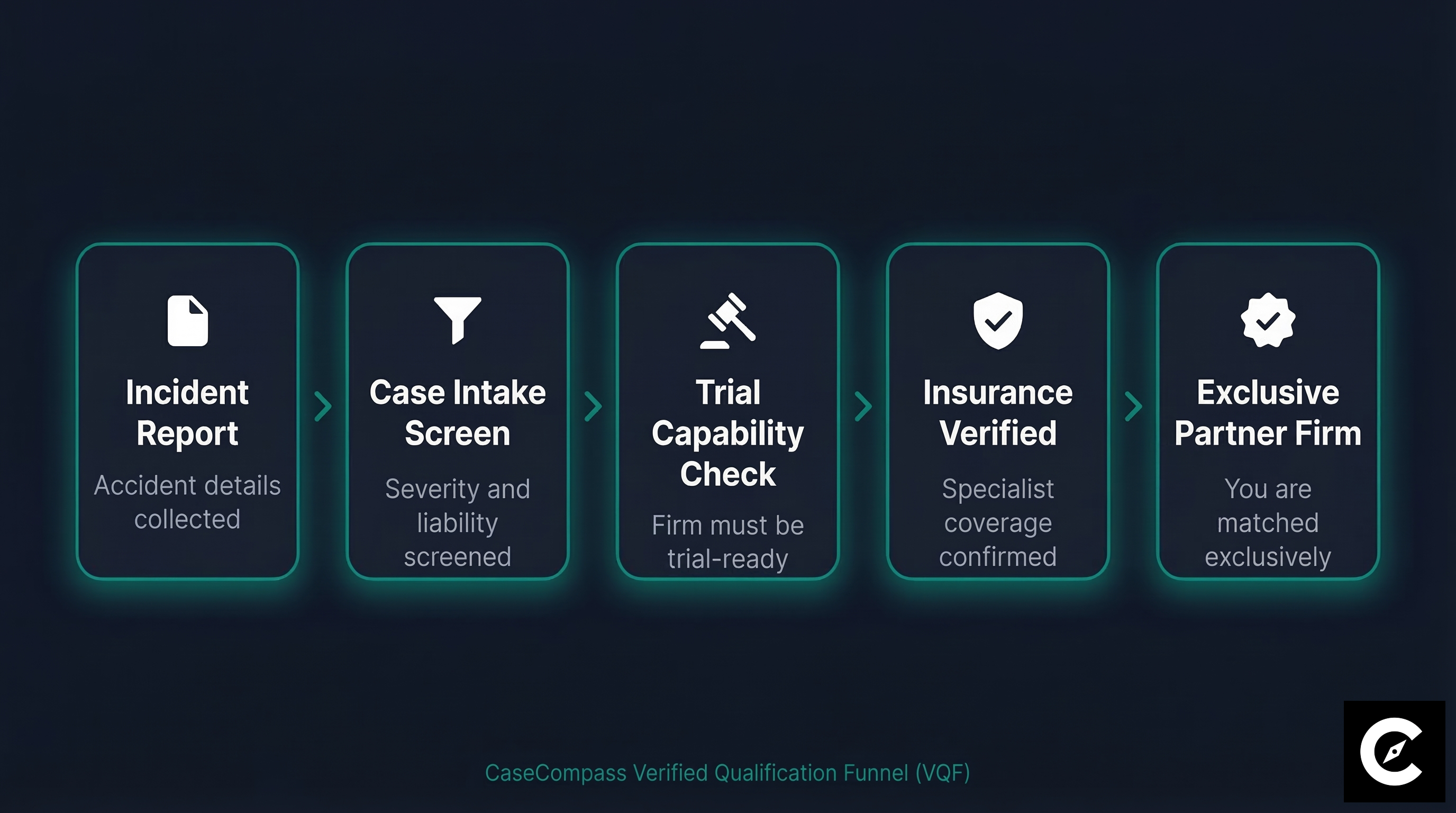
How We Match You with a Verified Firm
Not all law firms are qualified to handle serious injury cases. As shown in our qualification pipeline below, CaseCompass strictly filters incoming cases to ensure you are connected exclusively with a highly-vetted, specialized verified partner firm capable of taking your case to trial if an insurance company refuses to settle fairly.
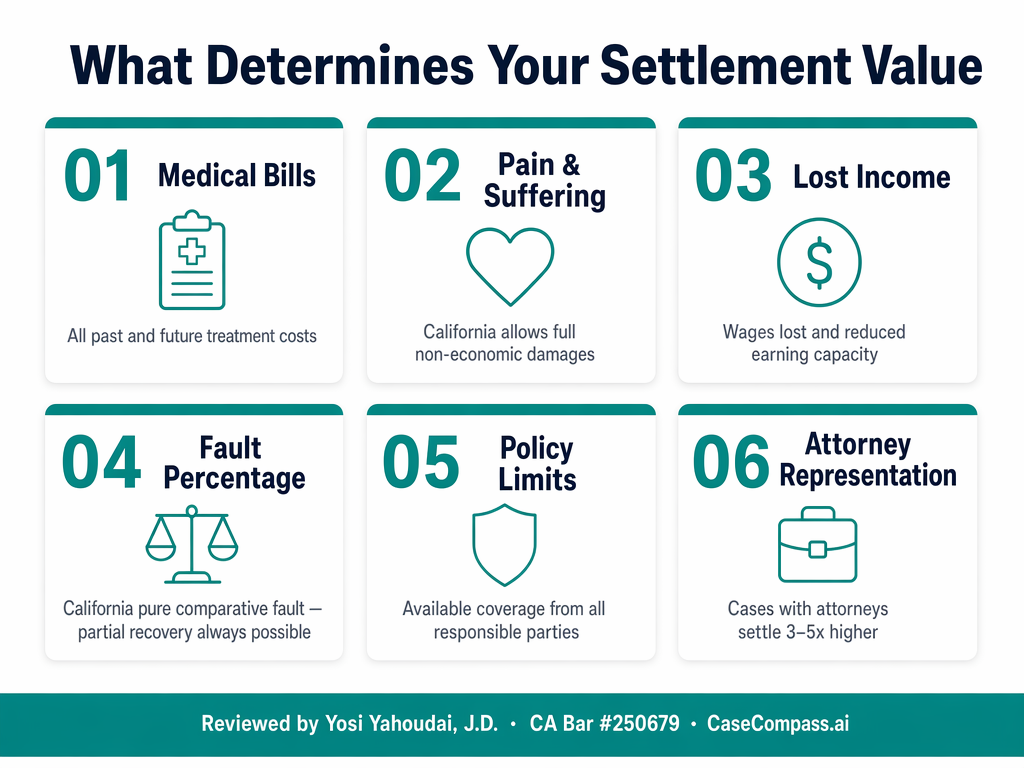
How much is your case worth in California?
Statewide settlement data by injury type, verified by Yosi Yahoudai, J.D..
| Metric | Value | Source |
|---|---|---|
| Federal minimum liability — standard freight carriers | $750,000 | .gov ✓FMCSA (fmcsa.dot.gov) — 49 CFR § 387.9(as of 2025) |
| Federal minimum liability — hazardous materials | $1,000,000 to $5,000,000 | .gov ✓FMCSA — 49 CFR § 387.9(as of 2025) |
| [FMCSA](https://www.fmcsa.dot.gov/) hours-of-service limit — property drivers | 11 hours driving / 14 hours on-duty | .gov ✓49 CFR Part 395(as of 2025) |
| Driver log retention period (then legally destroyable) | 6 months | .gov ✓49 CFR § 395.8(k)(as of 2025) |
| California statute of limitations — personal injury | 2 years from accident date | statuteCCP § 335.1(as of 2025) |
| Average ER visit cost — Los Angeles County | $4,100 | .gov ✓HCUP (hcupnet.ahrq.gov)(as of 2023) |
| Severe / catastrophic injury multiplier | 5x–10x+ medical costs | firm dataAttorney estimate · Yosi Yahoudai, J.D. · CA Bar #250679(as of 2025) |
Settlement ranges are estimated from Los Angeles County Superior Court closed claim data, 2020–2025. Reviewed by Yosi Yahoudai, J.D., California Bar #250679. Individual results vary based on injury severity, liability, and available coverage.
Common Mistakes to Avoid
- 1
Mistake #1: Waiting more than 48 hours to contact an attorney. By the time most victims call us, the carrier's investigator has already visited the scene, the driver has given a statement, and the ELD data preservation window is closing. A spoliation letter sent after 72 hours may not prevent automatic deletion under 49 CFR § 395.8(k). Contact an attorney the same day
the carrier's team has been working your case since the crash.
- 2
Mistake #2: Treating the driver as the only defendant. In our experience handling LA freight corridor cases, the cargo loader, maintenance contractor, and carrier each carry separate federal insurance policies
and each may bear independent liability under FMCSA regulations. Focusing only on the driver leaves multiple policy layers completely unclaimed. An attorney identifies all liable parties before filing any single claim.
- 3
Mistake #3: Leaving the scene without photographing the truck's DOT number. Without the DOT number, identifying the carrier can take weeks
during which evidence retention obligations have not been formally triggered. The carrier name on the cab door and the DOT number on the door or bumper are the two fastest paths to the correct defendant. Photograph both before the truck moves.
- 4
Mistake #4: Settling before reaching Maximum Medical Improvement. Truck accident injuries
spinal trauma, TBI, internal injuries — often require surgeries not identified until weeks post-crash. Settling before your physicians have assessed permanent impairment locks in a number that excludes future care costs entirely. MMI is your floor for settlement; do not sign a release before reaching it.
- 5
Mistake #5: Missing California's 2-year statute of limitations. Under CCP § 335.1, the civil filing deadline is exactly 2 years from the accident date
no extension exists. Cases that approach this deadline lose negotiating leverage because the insurer knows litigation is constrained. Contact counsel well before the 18-month mark to preserve full litigation options.
Why Work With a CaseCompass Attorney
No upfront cost. No obligation. Just answers.
Your Consultation Is Always Free
Every attorney on CaseCompass works on contingency — you pay nothing upfront, and nothing at all unless your attorney wins or settles your case.
Government-Sourced, Attorney-Verified
Every guide is built from official state records, federal statutes, and government data — then reviewed by a licensed California attorney with a verified clean disciplinary record.
Re-Verified Every 90 Days
Content is reviewed on a 90-day cycle with the reviewing attorney's name and Bar number listed transparently on every page.
24/7 Intake — English & Spanish
Every CaseCompass partner firm provides round-the-clock intake in both English and Spanish so you can get answers the moment you need them.
Your Privacy Is Protected
We never share your personal information without your explicit consent — your eligibility check is free, confidential, and carries zero obligation.
More Help
How to Choose the Right Lawyer
Bar verification, consultation questions, red flags, and contingency fee structures under California law.
Find a Trusted Auto Body Shop
Vetted collision repair shops in Los Angeles — insurance-approved and independently rated.
Lowball Settlement Offers
How to detect and counter a lowball insurance offer after your accident.
Insurance Claim Denied?
Steps to take when your insurance company denies or undervalues your claim.
Frequently Asked Questions
Can I sue both the truck driver and the trucking company in California?▼
Yes. Under California's respondeat superior doctrine, employers are liable for negligent acts their employees commit within the scope of employment. In most cases, you file claims against the driver, the carrier, and any other parties whose negligence contributed — such as a cargo loader or maintenance contractor. An attorney identifies all liable parties and their respective insurance coverage.
What federal regulations apply to commercial trucks in California?▼
All commercial trucks operating in California are governed by FMCSA regulations, including the 11-hour daily driving limit, mandatory pre-trip inspections, drug and alcohol testing, cargo securement rules, and electronic logging device (ELD) requirements. California also enforces these rules through the CHP commercial vehicle inspection program. Violations of federal regulations establish negligence per se under California law.
How much insurance does a commercial truck carry in California?▼
Federal law sets a floor of $750,000 for standard freight. Trucks carrying hazardous materials must carry $1 million to $5 million. California does not set additional minimums on top of federal requirements, but major carriers typically carry umbrella policies far exceeding the federal minimums. Your attorney can subpoena the carrier's full insurance schedule.
What is a spoliation letter and how fast does it need to be sent?▼
A spoliation letter is a legal preservation demand requiring the carrier to preserve driver logs, GPS data, ECM/black box data, dashcam footage, and drug test records. FMCSA rules allow deletion after 6 months. California courts sanction carriers who destroy evidence after receiving one. Send it within 48 hours of retaining an attorney.
How long does a truck accident lawsuit take in California?▼
California truck accident cases typically take 18–36 months from filing to resolution. Cases with catastrophic injuries, multiple defendants, or disputed liability take longer. The complexity of FMCSA regulations, multiple insurance policies, and the severity of damages all extend the timeline. A Los Angeles attorney experienced in truck accident litigation can give a case-specific estimate after reviewing the facts.
What evidence is most critical in a California truck accident case?▼
The electronic logging device (ELD) data, dashcam footage, pre-trip inspection logs, and the driver's drug test results taken post-accident. Federal regulations allow carriers to delete logs after 6 months. A spoliation letter sent within 48 hours is the only mechanism to legally compel preservation. Contact an attorney the same day as the crash.
What if the truck was leased — who is liable in California?▼
Under FMCSA lease regulations (49 CFR Part 376), the motor carrier operating the leased vehicle is liable for accidents — not the leasing company. However, the vehicle owner may bear concurrent liability if a mechanical defect contributed. An attorney identifies all defendants and their insurance coverage before any single claim is filed.
Can I get punitive damages in a California truck accident case?▼
Yes, if the carrier knowingly violated FMCSA safety rules — such as allowing hours-of-service violations or ignoring a failed inspection. California Civil Code § 3294 authorizes punitive damages for malicious or oppressive conduct. FMCSA violation history is discoverable and can establish the required conduct standard. Contact an attorney to assess punitive exposure.
Sources & Citations
- .gov[1] [FMCSA](https://www.fmcsa.dot.gov/) Financial Responsibility — 49 CFR § 387.9 ↗
- .gov[2] [FMCSA](https://www.fmcsa.dot.gov/) Hours of Service — 49 CFR Part 395 ↗
- statute[3] California [CCP § 335.1](https://leginfo.legislature.ca.gov/faces/codes_displaySection.xhtml?sectionNum=335.1.&lawCode=CCP) — Statute of Limitations ↗
- .gov[4] [NHTSA FARS](https://www.nhtsa.gov/research-data/fatality-analysis-reporting-system-fars) — California Truck Fatality Data ↗
Check My Case Value & Protect My Claim →
Free · No obligation · 24/7 intake open
⚡ Free · No Obligation
See If You Qualify in 60 Seconds
Step 1 — Select accident type
What type of accident were you in?