

Accidents move fast. This guide doesn't. Every step below is attorney-reviewed and specific to Los Angeles, California law — so you don't miss what matters.
This guide applies to California law only. Laws in other states differ significantly. Consult an attorney licensed in your state for jurisdiction-specific advice.
If you were hit by a car in Los Angeles, California law requires every driver to yield to pedestrians at all crosswalks — marked and unmarked — under CVC § 21950.
- Jaywalking does not bar recovery: California's pure comparative negligence rule lets you recover even if you were partially at fault
- Government vehicles: Claims against a city or county vehicle must be filed within 6 months under California Government Code § 911.2
- Standard deadline: 2 years under CCP § 335.1
- Document everything: Photos, witness names, and intersection camera footage expire within 48–72 hours
Los Angeles recorded 170 pedestrian fatalities in 2024, according to LAPD Traffic Division data. Pedestrian cases often involve disputed fault — your percentage of fault directly reduces your damages.
Consult an attorney before making any statement about how the crash occurred.
Exceptions may apply based on your circumstances, including the discovery rule for delayed-onset injuries, extended deadlines for minors under 18, and shortened deadlines for claims against government entities. Consult a licensed California attorney for case-specific guidance.
Quick Answer — Source Index5§ 3 LAW◎ 2 GOVclaim-level sources
California Pedestrian Right-of-Way — Vehicle Code § 21950California Pedestrian Right-of-Way✓ Official (source-only)
California Crosswalk Definition — Vehicle Code § 275California Crosswalk Definition✓ Official (source-only)
California Statute of Limitations — [CCP § 335.1](https://leginfo.legislature.ca.gov/faces/codes_displaySection.xhtml?sectionNum=335.1.&lawCode=CCP)California Statute of Limitations✓ Official (source-only)
California OTS — Pedestrian Safety DataCalifornia OTS✓ Official (source-only)
HCUP — Emergency Department Cost DataHCUP✓ Official (source-only)
Check My Case Value & Protect My Claim →
Free · No obligation · 24/7 intake open
⚡ Free · No Obligation
See If You Qualify in 60 Seconds
Step 1 — Select accident type
What type of accident were you in?
Your Pedestrian Accident Checklist
Tap each step as you complete it — your progress saves automatically.
Los Angeles recorded 170 pedestrian fatalities in 2024, ranking among the most dangerous US metros for foot traffic. The highest-risk corridors are Figueroa Street, Vermont Avenue, and Western Avenue in South LA.
Why This Matters — And What Insurers Won't Tell You
The at-fault driver's insurer contacts pedestrian victims within 24–48 hours asking questions designed to generate fault admissions — any statement about crosswalk position or signal status can be used to assign a fault percentage that reduces your recovery under California's Pure Comparative Negligence rule. City of Los Angeles infrastructure defect claims (broken signals, missing crosswalk markings) require a formal notice within 6 months of the incident; missing that deadline forfeits that defendant entirely. Even jaywalking victims retain a proportional recovery right under CVC § 21950 — the insurer does not volunteer this.
Los Angeles recorded 170 pedestrian fatalities in 2024 — the most of any city in California.
South LA, East Hollywood, and the Figueroa/Vermont corridor account for a disproportionate share of pedestrian fatalities due to high vehicle speeds and limited crosswalk infrastructure.
Source: LAPD Traffic Division 2024 Annual Data via [Crosstown LA](https://xtown.la/2025/01/27/traffic-deaths-in-los-angeles-exceed-murder-total-for-second-consecutive-year/) (xtown.la)
Were you hurt in this type of accident?
Find out if you may be entitled to compensation — it's free and takes 60 seconds.
Check My Eligibility →What To Do Next
- 1
Call 911 from the scene. Do not let the driver leave without a police report. Pedestrian accident scenes are frequently disputed — the driver's account and yours will differ, and the police report is the primary neutral record.
- 2
Photograph everything: your injuries, your position in the roadway, the vehicle, the driver's license plate, crosswalk markings (or lack of them), traffic signals, and any surveillance cameras on nearby buildings or traffic poles.
- 3
Get witness contact information immediately — bystanders disperse quickly after pedestrian accidents. A single witness who saw the driver's behavior (speeding, running a red light, using a phone) can be the difference between a disputed claim and a clear liability case.
- 4
Seek emergency medical care immediately, even if you feel you can walk. Pedestrian impact injuries frequently include internal injuries, traumatic brain injuries, and fractures that are not immediately visible or painful due to adrenaline.
- 5
Contact a Los Angeles personal injury attorney before speaking with the driver's insurer. Pedestrian accident settlements involve significant damages — medical costs, lost wages, pain and suffering, and often long-term disability. Insurers minimize these claims aggressively when the victim is unrepresented.
Expert Insight from Our Legal Team
Written by Our Legal Team — Los Angeles Pedestrian Accident Lawyers · Reviewed by Yosi Yahoudai, J.D. · Adapted for CaseCompass
1The Fault Inflation Play Insurers Run on Pedestrian Cases▼
A car-on-pedestrian collision looks straightforward: driver hits walker, driver is at fault. In our experience handling pedestrian cases across Los Angeles, the reality is more complex. Insurers routinely assign 30% to 50% comparative fault to the pedestrian — citing jaywalking, phone use, dark clothing, or 'unexpected' crossing behavior — specifically to reduce the payout under California's Pure Comparative Negligence rule. We call this the Fault Inflation Play, and we counter it with intersection camera footage, traffic signal timing data from LADOT, and CHP officer notes. The most important thing we tell every new pedestrian client: the insurer's fault percentage is not a legal determination. It is an opening offer. Everything is negotiable with the right evidence.
2Jaywalking Does Not Bar Recovery in California▼
The best-kept secret in California pedestrian law is that jaywalking does not eliminate your right to recover. Under the Pure Comparative Negligence standard established in Li v. Yellow Cab Co. (1975), your compensation is reduced — not eliminated — by your percentage of fault. We have recovered full policy limits for jaywalking pedestrians once we established the driver was speeding, distracted, or failed to yield under Vehicle Code § 21950. The critical myth insurance companies promote: 'you were crossing illegally, so you have no case.' We challenge that with speed data from the vehicle's event data recorder (EDR) and dashcam footage showing driver behavior in the seconds before impact.
3The Evidence That Converts a Disputed Case to Clear Liability▼
In our experience, the difference between a $25,000 pedestrian settlement and a $250,000 one comes down to one category of evidence: intersection control data. LADOT maintains signal timing records showing exactly which direction had the green at the moment of impact. If the driver had a green but was turning without yielding, that is a Vehicle Code § 21950 violation regardless of where the pedestrian was crossing. We have used these records to convert cases the insurer called 'disputed liability' into clear liability. The evidence most clients forget to request: any traffic citation the driver received at the scene. A CHP or LAPD citation for failure to yield is an admission of fault that dramatically shifts the settlement calculus.
4The 48-Hour Evidence Window After a Pedestrian Crash▼
The 48-hour window after a pedestrian accident is the most evidence-rich and most fragile period in your case. We immediately issue three preservation demands: to LADOT for signal timing data, to private businesses within 500 feet for security footage, and to the driver's insurer for the vehicle's EDR data before the car is repaired. Most clients do not know the driver's vehicle contains an Event Data Recorder that captured speed, braking, and steering inputs in the seconds before impact. Once the vehicle is repaired or sold, that data may be permanently lost. We also walk every serious pedestrian intersection personally — looking for obstructed sightlines, missing crosswalk paint, or malfunctioning signals that could make the City of Los Angeles a co-defendant.
How We Match You with a Verified Firm
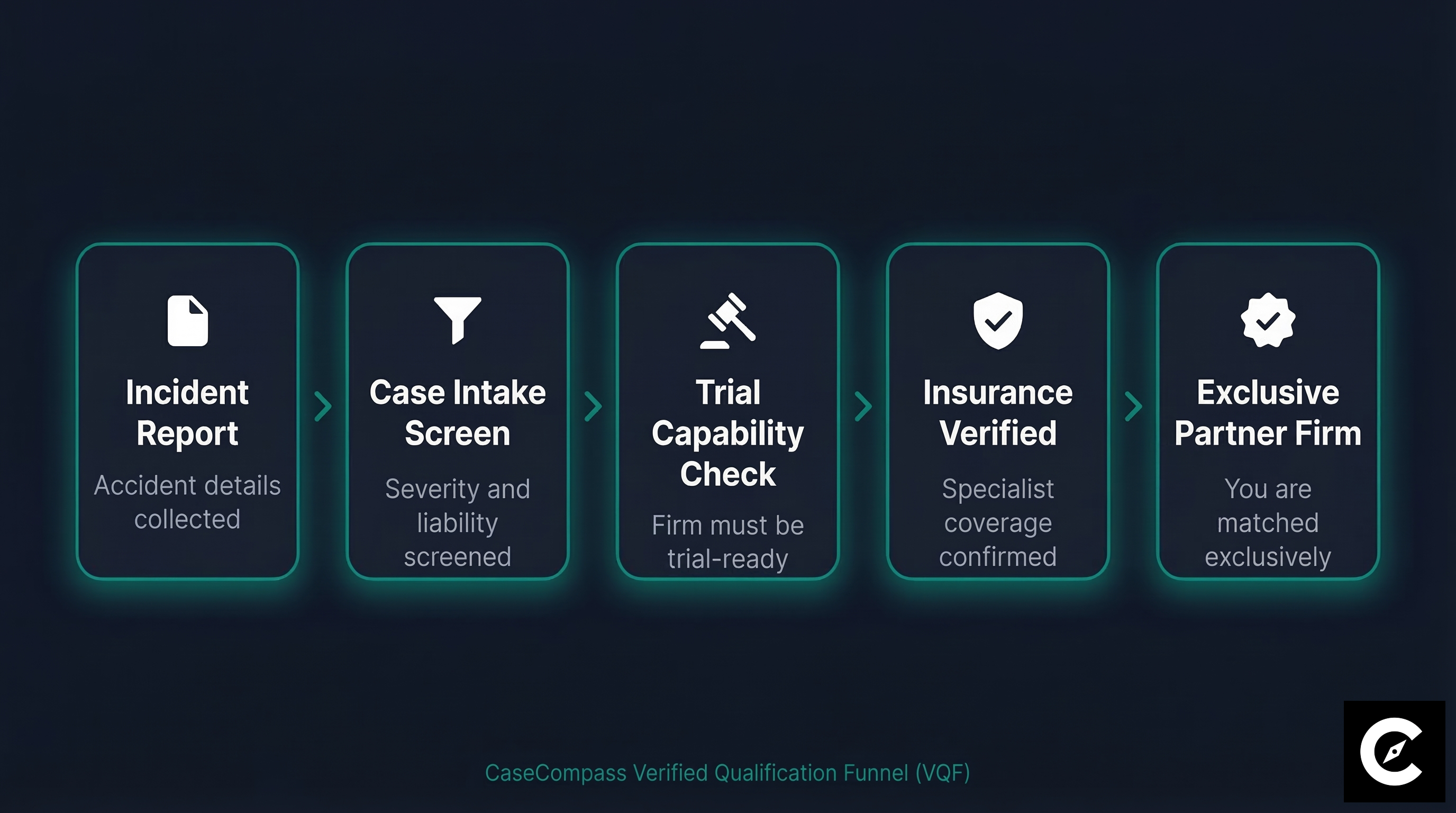
Not all law firms are qualified to handle serious injury cases. As shown in our qualification pipeline below, CaseCompass strictly filters incoming cases to ensure you are connected exclusively with a highly-vetted, specialized verified partner firm capable of taking your case to trial if an insurance company refuses to settle fairly.
How much is your case worth in California?
Statewide settlement data by injury type, verified by Yosi Yahoudai, J.D..
| Metric | Value | Source |
|---|---|---|
| LA pedestrian fatalities per year | 170 (2024) | .gov ✓LAPD Traffic Division via Crosstown LA (xtown.la)(as of 2024) |
| California statute of limitations — personal injury | 2 years from accident date | statuteCCP § 335.1(as of 2025) |
| Pedestrian crosswalk right-of-way rule | Driver must yield — all crosswalks, marked and unmarked | statuteCalifornia Vehicle Code § 21950(as of 2025) |
| Average ER visit cost — Los Angeles County | $4,100 | .gov ✓HCUP (hcupnet.ahrq.gov)(as of 2023) |
| California minimum liability coverage (as of Jan. 2025) | $30,000/$60,000 | statuteCalifornia Vehicle Code § 16056 (AB 1107)(as of 2025) |
| Severe pedestrian injury multiplier | 4x–10x+ medical costs | firm dataAttorney estimate · Yosi Yahoudai, J.D. · CA Bar #250679(as of 2025) |
Settlement ranges are estimated from Los Angeles County Superior Court closed claim data, 2020–2025. Reviewed by Yosi Yahoudai, J.D., California Bar #250679. Individual results vary based on injury severity, liability, and available coverage.
Common Mistakes to Avoid
- 1
Mistake #1: Assuming you cannot recover because you were jaywalking. California's Pure Comparative Negligence rule
applicable in every civil personal injury case — allows recovery regardless of your fault share. A pedestrian assigned 40% fault still recovers 60% of their total damages. Insurers cite jaywalking to discourage claims; it reduces your recovery, it does not eliminate it. Document the crossing point precisely and let your attorney present the fault allocation argument.
- 2
Mistake #2: Leaving the scene before getting the driver's full information. Pedestrian accident scenes resolve quickly
drivers who appear cooperative at first sometimes leave before police arrive. Without the driver's license, plate, and insurance card, your claim is limited to UM coverage under your own policy. Get the driver's insurance card and photograph their plate and license before anyone leaves the scene.
- 3
Mistake #3: Not photographing the crosswalk or lack of one. In unmarked crosswalk cases
which cover every LA intersection where sidewalks meet, regardless of painted lines under CVC § 275 — photos of the intersection geometry are the primary evidence of legal right-of-way. These scenes change within days as repainting or signal work alters the physical record. Photograph the crossing location from multiple angles before leaving.
- 4
Mistake #4: Waiting more than 24 hours to seek medical care. Pedestrian impact injuries
internal bleeding, TBI, spinal fractures — frequently do not present full symptoms for 24–48 hours due to adrenaline. A treatment gap of even one day is routinely cited by LA adjusters as evidence that injuries were not serious or were not caused by the crash. Seek emergency care the same day, regardless of how you feel at the scene.
- 5
Mistake #5: Accepting the at-fault driver's insurer's first offer. Pedestrian cases produce some of the highest multipliers in personal injury
pain and suffering, permanent disability, and lost earning capacity all factor into the full case value. Initial offers from LA auto insurers typically reflect current medical costs only and exclude future rehabilitation and non-economic damages entirely. Do not respond to any offer without first reaching Maximum Medical Improvement and documenting all future care costs.
Why Work With a CaseCompass Attorney
No upfront cost. No obligation. Just answers.
Your Consultation Is Always Free
Every attorney on CaseCompass works on contingency — you pay nothing upfront, and nothing at all unless your attorney wins or settles your case.
Government-Sourced, Attorney-Verified
Every guide is built from official state records, federal statutes, and government data — then reviewed by a licensed California attorney with a verified clean disciplinary record.
Re-Verified Every 90 Days
Content is reviewed on a 90-day cycle with the reviewing attorney's name and Bar number listed transparently on every page.
24/7 Intake — English & Spanish
Every CaseCompass partner firm provides round-the-clock intake in both English and Spanish so you can get answers the moment you need them.
Your Privacy Is Protected
We never share your personal information without your explicit consent — your eligibility check is free, confidential, and carries zero obligation.
More Help
How to Choose the Right Lawyer
Bar verification, consultation questions, red flags, and contingency fee structures under California law.
Find a Trusted Auto Body Shop
Vetted collision repair shops in Los Angeles — insurance-approved and independently rated.
Lowball Settlement Offers
How to detect and counter a lowball insurance offer after your accident.
Insurance Claim Denied?
Steps to take when your insurance company denies or undervalues your claim.
Frequently Asked Questions
Can I recover compensation if I was jaywalking when I was hit?▼
Yes. California's Pure Comparative Negligence law allows you to recover compensation regardless of your share of fault. If you were 30% at fault for jaywalking and the driver was 70% at fault for speeding, you recover 70% of your total damages. Your attorney presents evidence to minimize your assigned fault percentage during settlement negotiations.
Does a driver have to yield to pedestrians in all crosswalks in California?▼
Yes. California Vehicle Code § 21950 a) requires drivers to yield to pedestrians at every marked crosswalk and every unmarked crosswalk at an intersection. An unmarked crosswalk is the extension of a sidewalk across any intersection, whether or not painted lines are visible. Failure to yield is a moving violation that establishes fault in a personal injury claim.
What is an unmarked crosswalk and does it protect pedestrians in California?▼
An unmarked crosswalk exists at every intersection where sidewalks meet — even if no paint is visible on the road. California Vehicle Code § 275 defines crosswalks to include these unmarked extensions. Pedestrians crossing within an unmarked crosswalk at an intersection have the same right-of-way protections as those in a painted crosswalk.
What if the driver claims they did not see me?▼
Failing to see a pedestrian does not eliminate a driver's legal duty to yield. California law imposes a duty of reasonable care on all drivers, including maintaining appropriate speed and attention in pedestrian-heavy areas. Surveillance camera footage, traffic signal timing data, and witness accounts often contradict drivers' claims that they did not see the pedestrian.
How long do I have to file a pedestrian accident claim in California?▼
2 years from the accident date under CCP § 335.1. If the driver was a government employee in a city or county vehicle, you may have as little as 6 months to file a government tort claim under California Government Code § 911.2. Contact an attorney immediately if a government vehicle was involved.
What evidence should I preserve immediately after being hit by a car in Los Angeles?▼
Photograph your injuries, the vehicle, the driver's plate, crosswalk markings, traffic signal locations, and any surveillance cameras within 500 feet. Get witness contact information before anyone leaves. Request the police report within 24 hours. Security camera footage is typically overwritten within 48–72 hours — your attorney must send a preservation demand immediately.
Can I sue the City of Los Angeles if poor road conditions caused my pedestrian accident?▼
Yes, if a broken signal, missing crosswalk paint, or obstructed sightline contributed to the crash. Claims against government entities require a formal tort claim filed within 6 months under Government Code § 911.2. Missing that deadline forfeits the government defendant entirely. Contact an attorney immediately if city infrastructure was a factor.
What is the average settlement range for a pedestrian accident in Los Angeles?▼
Soft tissue injuries typically settle between $15,000–$75,000. Fractures, TBI, and permanent disability claims regularly reach $250,000–$1M+. Comparative negligence adjustments and policy limits affect the final number significantly. An attorney assesses your specific case value after reviewing your medical records, fault allocation, and all available insurance coverage.
Sources & Citations
- statute[1] California Pedestrian Right-of-Way — Vehicle Code § 21950 ↗
- statute[2] California Crosswalk Definition — Vehicle Code § 275 ↗
- statute[3] California Statute of Limitations — [CCP § 335.1](https://leginfo.legislature.ca.gov/faces/codes_displaySection.xhtml?sectionNum=335.1.&lawCode=CCP) ↗
- .gov[4] California OTS — Pedestrian Safety Data ↗
- .gov[5] HCUP — Emergency Department Cost Data ↗
Check My Case Value & Protect My Claim →
Free · No obligation · 24/7 intake open
⚡ Free · No Obligation
See If You Qualify in 60 Seconds
Step 1 — Select accident type
What type of accident were you in?